How to Clean Grout Lines Naturally with Baking Soda
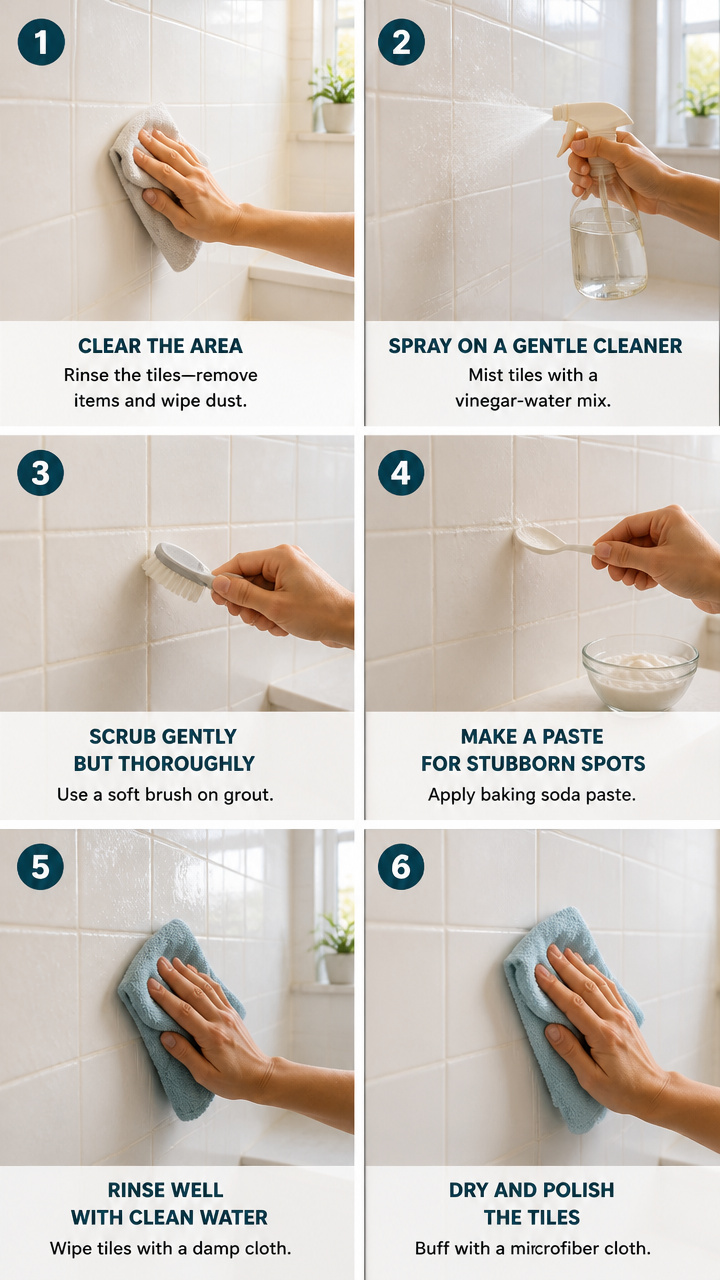
You can clear away dark floor grime and bring your tile grout back to its original color using two basic pantry items. Mix two parts baking soda with one part hydrogen peroxide and a tablespoon of regular dish soap to create a thick paste. Spread the paste along your grout lines, let it sit for ten minutes, and scrub with a stiff brush before rinsing clean.
Why Natural Grout Cleaning Works Best
Harsh chemical sprays can strip away sealant and damage your tile over time. Baking soda acts as a mild abrasive that lifts set-in dirt without scratching the surface. Hydrogen peroxide brightens white grout lines, kills mild surface mold, and breaks down greasy dirt without leaving dangerous fumes behind in small spaces.
Using natural items keeps your home safe for children and pets who walk on the wet floors. Regular maintenance with gentle pastes also keeps tile sealants intact much longer than bleach products. This simple routine leaves your entire bathroom smelling clean without any perfumed coverup sprays.

How to Clean Grout Lines Naturally in Every Room
To deep clean your floor tile efficiently, gather your supplies before you start. Work in small three-foot sections so the cleaning paste does not dry out on the floor before you finish scrubbing.
- Combine the ingredients: Mix one cup of baking soda, half a cup of hydrogen peroxide, and one tablespoon of clear liquid dish soap in a plastic bowl.
- Apply the paste: Spread a thick layer over the dirty grout lines using an old toothbrush or a grout brush.
- Wait ten minutes: Allow the mixture to sit on the floor so the peroxide can break down grease and surface stains.
- Scrub the lines: Work the brush in small circular motions along each line, applying moderate downward pressure.
- Wipe clean: Dampen a microfiber cloth with warm water and wipe away all residual paste, rinsing your cloth frequently in a bucket.
Removing Hard Water Stains and Soap Scum
Shower tiles often accumulate thick soap scum mixed with hard water minerals. Spraying plain white vinegar directly onto shower walls helps break down mineral crusts on ceramic surface tiles. Never use vinegar on natural stone like marble or granite, as the acid will dull the smooth finish of the stone.
For tough mineral buildup on ceramic tile, apply the baking soda paste first, then lightly mist it with white vinegar. The two items will foam up immediately, lifting trapped dirt out of small microscopic pores. Wait five minutes for the bubbling action to stop before you begin scrubbing the tile.
Preventing Grime Buildup on Tile Floors
Keeping grout lines clean takes much less work when you stick to a simple daily and weekly routine. Trapped moisture is the main cause of dark spots, soap film, and mildew in home bathrooms.
- Use a squeegee: Clear excess water off shower walls and floor tiles right after every single shower.
- Run the exhaust fan: Leave your bathroom fan running for twenty minutes after bathing to dry out the room air.
- Seal the grout: Apply a clear liquid sealer to clean grout lines once every year to block water and dirt penetration.
- Mop weekly: Wash tile floors once a week using a mop dampened with warm water and a few drops of dish soap.
Maintaining Natural Cleaning Tools
The right cleaning tools make the job much faster and prevent cross-contamination between rooms. Stiff synthetic brushes scrub narrow spaces effectively without scratching polished tiles. Keep dedicated brushes for bathroom floors separate from the tools you use on kitchen surfaces.
Rinse all your brushes and sponges in hot water immediately after finishing the floor routine. Allow your scrub brushes to air dry completely in a well-ventilated area before storing them in your supply cabinet. Clean tools prevent mold growth and keep your next natural cleaning routine quick and effective.


Comments
Post a Comment